


Extreme Insights
From Drawing to Delivery: Where Precision Failures Actually Happen and How EPSP Prevents Them
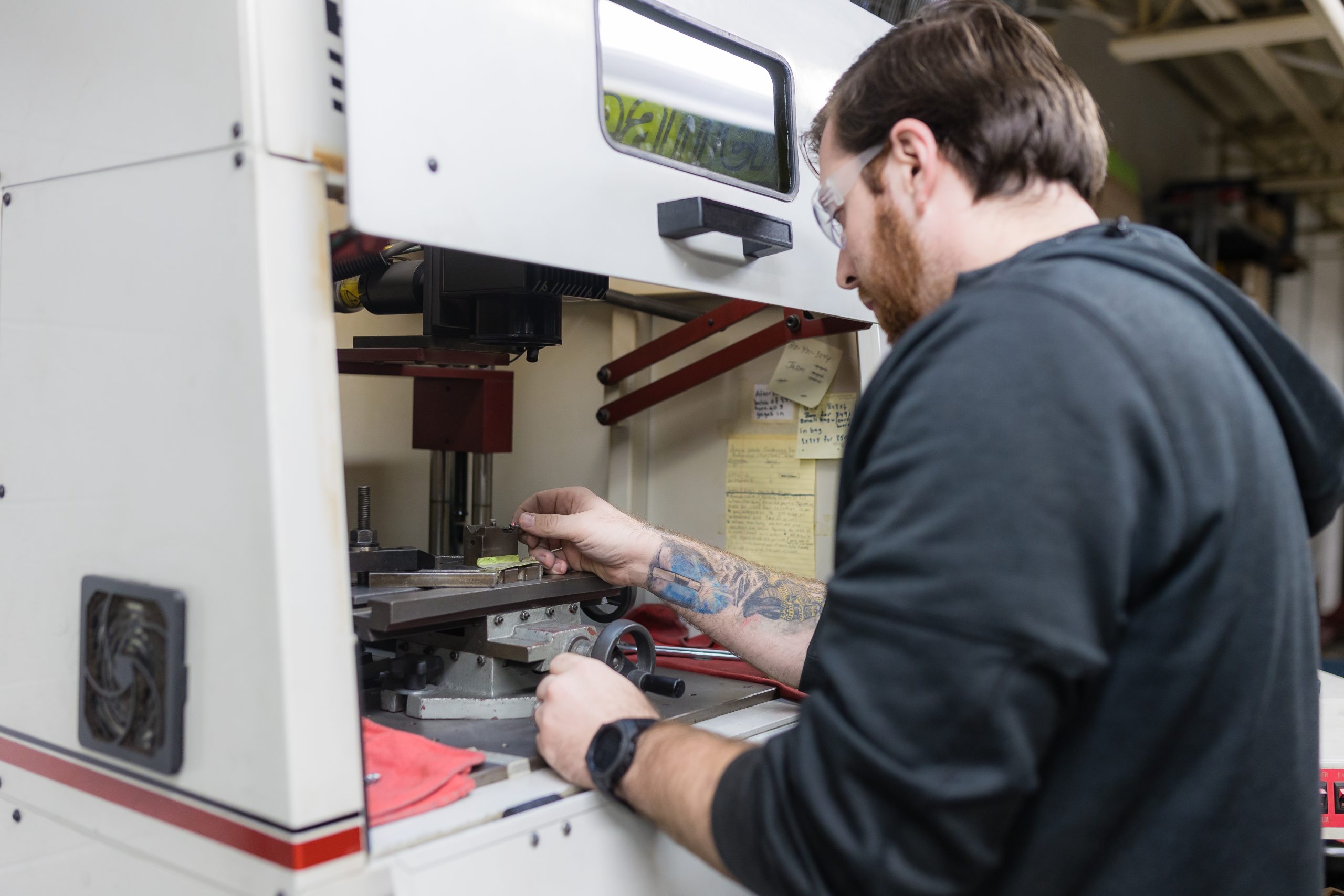
In aerospace manufacturing, the defect discovered during final inspection is rarely where the problem began. Most quality escapes originate earlier in the production cycle, often during planning, setup, or early machining operations. Precision manufacturing process control prevents those early signals from developing into defects that reach the customer.
For aerospace programs built around mission critical components, the consequences of a late discovery extend well beyond scrap. Investigations begin. Traceability records are reviewed. Supplier accountability becomes part of the discussion. When production quality control fails to identify variation early, the entire program can experience disruption.
Preventing defects requires understanding where failures occur between drawing review and delivery.
Where failures begin between drawing and production
The first opportunity for variation appears during drawing interpretation. Aerospace drawings frequently contain complex dimensional relationships, geometric tolerances, and surface finish requirements that affect both machining strategy and inspection planning.
If engineering teams do not fully understand the intent behind these requirements during review, the process developed for the part may contain hidden weaknesses. A dimension that appears manageable in isolation may interact with another feature in ways that complicate machining stability or inspection accuracy.
Manufacturing process risk often increases during setup and early machining as well. The first part may measure within tolerance, yet the method used to achieve that result may not remain stable across a full production run. Tool wear, fixturing alignment, and environmental conditions can influence features that initially appear controlled.
When teams fail to monitor these factors carefully, the process can drift gradually without immediate detection.
Why process control matters in aerospace manufacturing
Aerospace manufacturing demands repeatability over long production cycles. Producing a compliant part once is not sufficient. The process must remain stable across multiple lots and over extended timelines.
Precision manufacturing process control ensures that the conditions which produced the first acceptable part remain consistent throughout production. This stability is especially important when working with tight aerospace tolerances that leave little room for variation.
Small dimensional shifts can influence fit, alignment, or system reliability. If those shifts develop gradually across several lots, the resulting investigation can interrupt delivery schedules and introduce supplier risk.
Effective production quality control focuses on the stability of the process rather than relying solely on final inspection. Detecting trends early allows teams to correct variation before it becomes a nonconformance.
How process risk develops across the production system
Manufacturing process risk rarely appears as a single dramatic event. It develops when several small weaknesses interact across the production system.
Engineering review may identify dimensional challenges yet overlook how machining conditions influence a critical feature. Production planning may account for machine capability but underestimate the inspection effort required to verify tight tolerances. Documentation systems may capture the required data but organize it in ways that make traceability difficult during audits.
Individually these issues may appear manageable. Together they increase the likelihood that a deviation will move through the process unnoticed. Over long aerospace production cycles, this accumulation of risk can eventually disrupt stable delivery performance.
Inspection checkpoints for early defect detection
Inspection checkpoints provide visibility into process stability throughout production. When engineers place checkpoints strategically within the machining sequence, they reveal variation before it becomes a defect.
For example, an intermediate measurement taken after a rough machining operation can expose alignment changes that would affect finishing dimensions later in the process. Detecting the variation early allows the team to correct the setup before additional parts are affected.
Inspection data also supports trend analysis. When engineers track measurements across parts and lots, they can identify gradual drift that might signal tool wear or process instability. Addressing those signals early protects delivery schedules and reduces the chance of a quality escape.
Traceability as a safeguard in aerospace manufacturing
Traceability manufacturing systems form another critical element of aerospace quality control. They connect every component to its material certification, machining history, and inspection records.
When a concern rises, engineers and quality teams must reconstruct the production history of the part quickly and identify any affected hardware. Without organized traceability, the scope of an issue becomes difficult to define. Investigations expand, containment actions broaden, and program schedules may be affected.
Effective traceability turns documentation into a practical control tool rather than a simple compliance requirement.
Real scenarios that reveal process control weaknesses
Consider a program involving precision turned components used in an aerospace assembly. Initial production runs show that a critical diameter remains comfortably within tolerance. Over time, however, inspection data reveals a gradual movement toward the upper limit.
Because each part still meets specification, the trend receives little attention. Eventually the dimension exceeds tolerance and production stops while the team investigates. The root cause turns out to be progressive tool wear that could have been corrected earlier if the trend had been addressed.
Another situation may arise during a customer audit. The supplier is asked to provide traceability records for parts delivered several months earlier. The supplier must produce material certifications, machining documentation, and inspection reports clearly.
If those records are stored inconsistently or are difficult to retrieve, confidence in the supplier’s aerospace quality system can weaken even if the parts themselves are compliant.
These scenarios demonstrate how process weaknesses often appear gradually rather than suddenly.
How EPSP maintains precision manufacturing process control
EPSP approaches precision manufacturing process control as a continuous discipline that begins with engineering review and continues through final delivery. The objective is to reduce uncertainty at every stage of production.
Quality & Production teams review drawings carefully to understand tolerance relationships and functional intent. This review guides the development of machining strategies designed for long term stability rather than short term output.
Inspection checkpoints are integrated into the workflow so that variation can be identified early. Measurement data is evaluated not only for compliance but also for patterns that may signal emerging risk.
Traceability manufacturing systems connect material certifications, machining records, and inspection data into a unified documentation structure. When audits or program reviews require information, the production history of each component can be verified clearly.
Capacity discipline supports this approach. By focusing on a limited number of long term programs, EPSP maintains the engineering attention and inspection resources necessary to sustain consistent production quality control.
Why this matters for aerospace programs
Programs that rely on precision components rarely encounter problems because of a single visible error. Difficulties arise when early signals of variation pass unnoticed until the cost of correction becomes significant.
Precision manufacturing process control addresses this risk by aligning engineering review, machining operations, inspection checkpoints, and traceability within a coordinated system. When these elements reinforce one another, the likelihood of quality escapes decreases and supplier reliability improves.
For procurement leaders and quality managers evaluating long term manufacturing partners, the critical question is whether a supplier’s processes consistently prevent predictable failures before they occur.
Learn more about EPSP’s approach to process discipline and explore how controlled execution supports reliable performance across mission critical aerospace programs.
