


Extreme Insights
How Aerospace OEMs Should Qualify a Precision Supplier When Failure Is Not an Option
Aerospace procurement decisions often look controlled on paper until the first deviation appears in flight hardware. The process that prevents that moment is aerospace precision supplier qualification, and it is less about formal checklists and more about proving control under real operating conditions.
The risk is familiar across the industry. A supplier presents well during early discussions. The quote is acceptable. The timeline looks reasonable. Then a first article slips, documentation gaps surface during an audit, or a process change appears without clear notification. Programs absorb the impact through rework, schedule disruption, and loss of confidence. In regulated environments, the cost extends far beyond the affected lot. Risk is carried forward into every future delivery.
The decision challenge behind aerospace supplier selection
Qualifying a precision supplier is not simply approving a vendor. It is a decision about whether a supplier can be trusted to operate with discipline when no one is watching, across long cycle programs where consistency matters more than speed.
Aerospace OEMs and Tier 1 teams are not searching for a shop that can produce a compliant part once. They need suppliers that can manufacture to print, inspect to plan, maintain traceability, and respond to issues with ownership. When tolerances are tight and volumes are steady, the system behind the part matters as much as the machining capability itself.
What aerospace precision supplier qualification actually means
Qualification is evidence of repeatability. It answers a small number of critical questions:
- Can the supplier consistently meet design intent at the required tolerance?
- Can nonconformances be detected before shipment
- Can every part be traced through material, process, and inspection records?
- Can performance be sustained without unmanaged variation over time?
This is why precision manufacturing quality is not a claim. It is the result of controlled processes, calibrated inspection, trained operators, and a quality system that holds under schedule pressure.
AS9100 certification establishes a baseline. Qualification determines whether that system is mature, enforced, and practiced in daily production.
Why qualification matters in regulated aerospace manufacturing
Aerospace supplier risk rarely comes from a single failure. More often, it comes from small breakdowns that compound:
- A minor documentation gap becomes a traceability issue.
- A rushed setup leads to dimensional drift across lots.
- An uncontrolled tooling change alters surface finish.
- An incomplete inspection plan misses a critical feature.
When these issues surface late, the impact escalates quickly. Material is held, build schedules shift, and engineering and quality teams are pulled into containment and corrective action. Supplier transitions intended to reduce risk instead create new uncertainty.
Qualification is the phase where this risk can be addressed deliberately, before mission critical components are in production flow.
Key considerations that separate capability from surface readiness
Process control over equipment claims
Most suppliers can list machines and tolerances, but fewer can explain how they control variation. During qualification, OEMs should look for evidence that the supplier understands the relationship between print requirements, process capability, and measurement uncertainty.
A capable supplier can explain how tight characteristics are held across multiple lots, how tool wear is managed, offsets adjusted, and setups validated beyond a single compliant result. Engineering involvement is often the signal. When technical questions cannot be answered clearly, risk shifts downstream.
Inspection rigor aligned to part risk
Inspection must match the criticality of the component. Qualification should include a direct review of inspection planning, measurement methods, and recordkeeping.
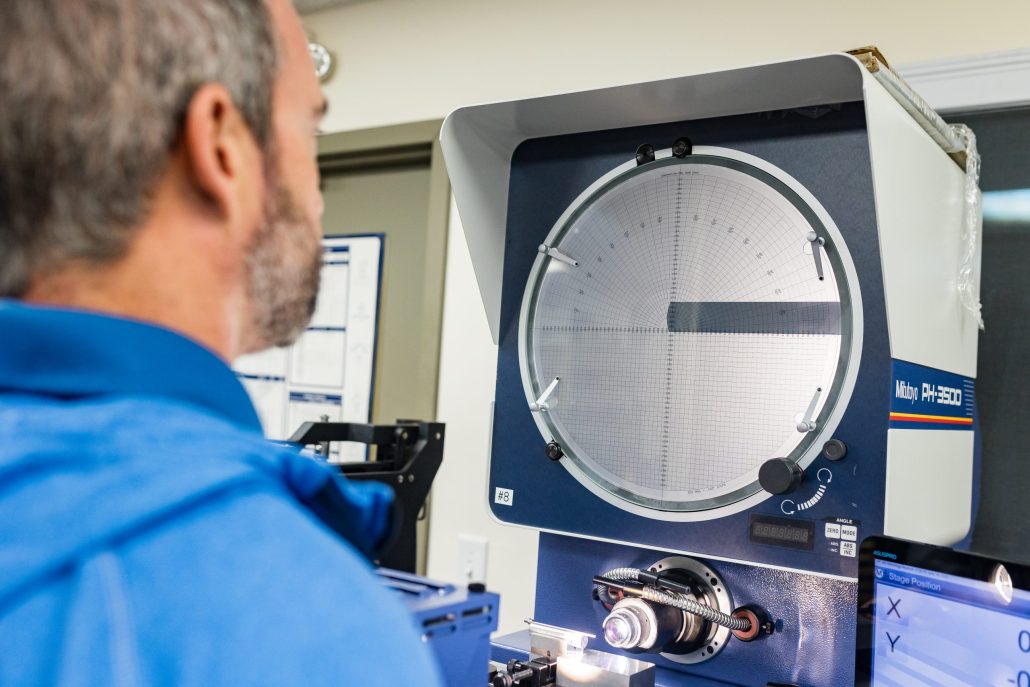
The presence of advanced metrology is not enough. What matters is calibration discipline, measurement uncertainty, and how inspection data is used to prevent escapes. This is where quality audits move from procedural checks to meaningful risk assessment.
Traceability that holds under audit pressure
In aerospace programs, traceability is a control mechanism. Qualification should verify how parts are linked to material certifications, process steps, inspection results, and special requirements.
Observing how lot control is managed on the floor and how records are retained and retrieved provides a clear signal. A disciplined supplier can produce complete documentation clearly, without scrambling when an audit request arrives.
Change control that protects long cycle programs
Many quality escapes originate with uncontrolled change. Tooling updates, personnel shifts, process transfers, and alternate materials are common realities, but the risk lies in how these changes are managed.
Qualification should confirm how the supplier controls revisions, approves process changes, and communicates impacts. Long cycle aerospace programs depend on stability. A qualified supplier treats change as a risk event that requires review, validation, and notification.
Capacity discipline and prioritization
Technical capability alone does not eliminate risk. Suppliers that overextend capacity often introduce variation as inspection is compressed, preventive maintenance slips, and documentation becomes reactive.
Aerospace OEMs should pay attention to how suppliers protect capacity and decide which work to accept. A supplier that prioritizes fewer, long term programs is often better positioned to execute consistently than one chasing volume across unrelated work.
Realistic scenarios that reveal qualification strength
Program ramps are a common stress point. A supplier that performs well at prototype quantities may struggle when delivery cadence increases. If process control was not proven during qualification, the ramp becomes the discovery phase, which is the most costly moment to learn.
Supplier transitions offer another example. When performance issues force a change, requalification must be efficient and thorough. First articles, documentation reviews, and customer oversight all come into play. Suppliers with disciplined qualification processes move through this phase with fewer surprises.
Audits tied to customer milestones also reveal maturity. Suppliers that operate audit ready as a daily condition respond with clarity and confidence. Those that prepare only when prompted expose hidden risk.
How EPSP approaches this challenge
EPSP operates on the principle that quality is assumed in aerospace, but execution is the differentiator. Qualification is treated as a technical process, not a sales stage.
Engineering engagement begins early. Risks are identified and discussed directly. Inspection planning is aligned to part criticality, with traceability treated as nonnegotiable. When issues arise, ownership and corrective action are expected, not deflection.
Capacity is protected intentionally. This allows tighter oversight, consistent execution, and sustained performance across long term programs. Fewer relationships enable deeper accountability, which matters in environments where failure is not acceptable.
Qualification as a risk control point
Supplier qualification is one of the few points where aerospace programs can reduce risk before it becomes embedded. It is the opportunity to evaluate process control, inspection discipline, traceability, change management, and capacity behavior under realistic expectations.
For teams responsible for mission critical components, these factors should guide supplier decisions more than promises of speed or price. To learn more about EPSP’s approach, explore how the company supports long cycle aerospace programs and begin a technical conversation grounded in evidence and accountability.
